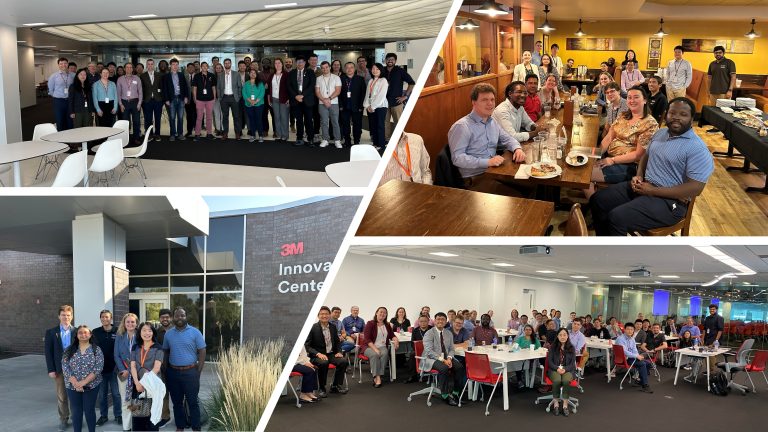
On October 3, 2025, we had the privilege of attending the 2025 3M Non-Tenure Faculty Award (NTFA) Symposium. It featured 28 outstanding early-career faculty from 25 universities, each presenting their cutting-edge research. It was a wonderful opportunity to connect with exceptional scholars across a broad range of scientific fields and to learn from their innovative work. We look forward to this event continuing to strengthen the partnership between 3M and the academic community, and to fostering long-lasting relationships with the emerging leaders of research.
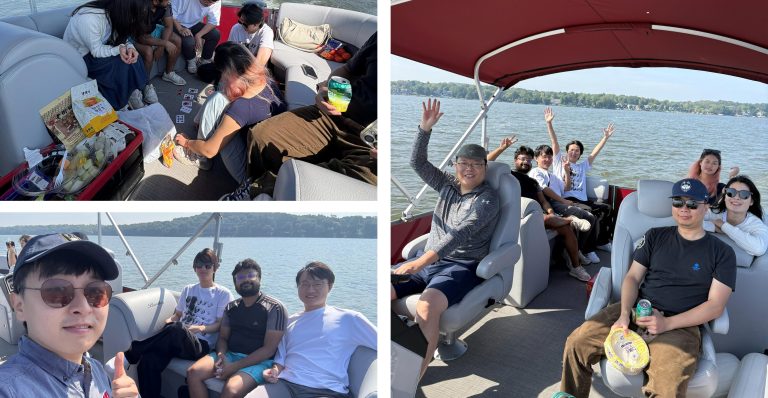
On Sunday, September 14, 2025, our group gathered at at 2101 Allen Boulevard, Middleton, WI 53562 (Marshall Boats) for a delightful outing aboard a pontoon boat on Lake Mendota. We enjoyed a lively and scenic time on the water — good conversation, laughter, sunshine, and a refreshing break from the usual routine. Thanks to everyone who joined and brought the positive energy; it was a wonderful way to connect, relax, and make lasting memories together.
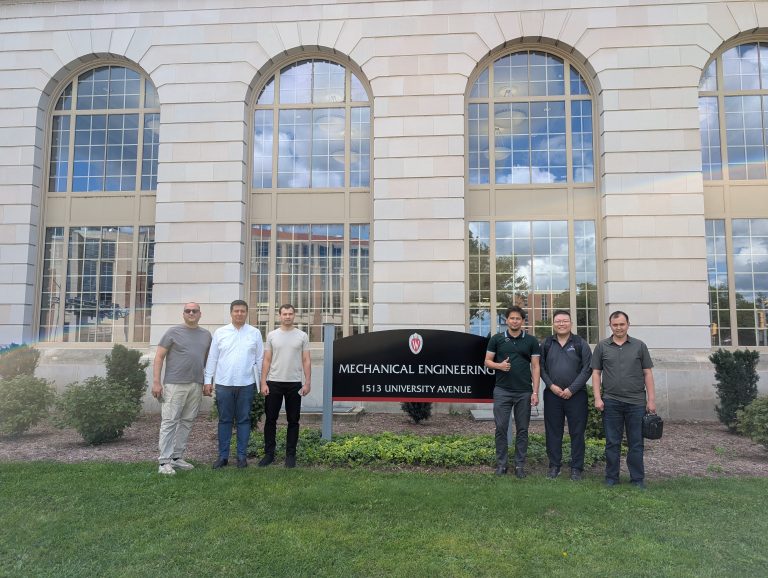
From August 25–26, we welcomed a delegation of five community leaders from Turkmenistan as part of the International Visitor Leadership Program (IVLP), facilitated through the International Institute of Wisconsin and the U.S. Department of State. During their visit to Madison, they met with our team to explore how to make desalination more efficient within the broader themes of water‐conservation policy and resilient agriculture. Many thanks to everyone who helped make this meaningful exchange possible, and to Prof. Ying Li for engaging in the discussion and advancing this important topic.
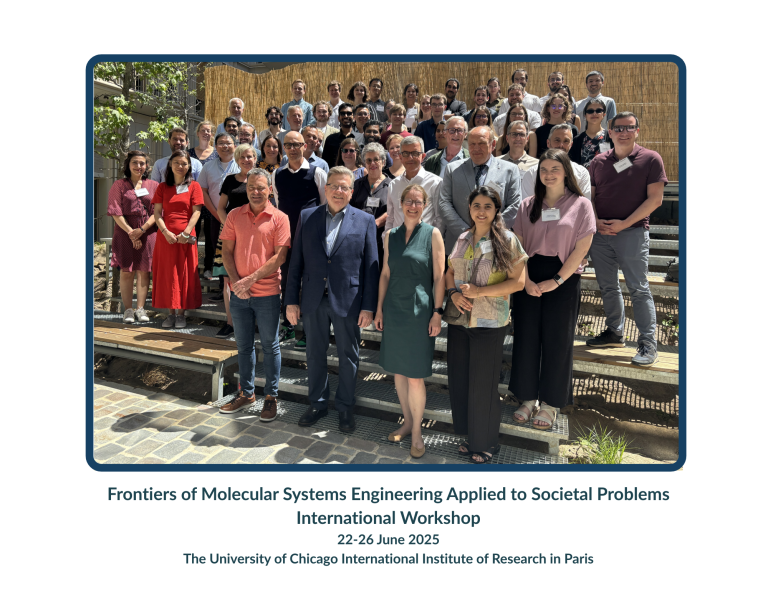
Dr. Ying Li recently participated in the international workshop Frontiers of Molecular Systems Engineering Applied to Societal Problems, held 22-26 June 2025 at the International Institute for Research in Paris (a venue of the University of Chicago) in Paris. This four-day workshop brought together a global cohort of scientists and engineers working at the molecular-systems interface of real-world challenges. The program was structured around eight thematic sessions, covering topics such as global health equity, immunoengineering, phase separation in biology, matter-to-life transitions, food sustainability, water security, energy transition, and molecular engineering design/manufacturing.